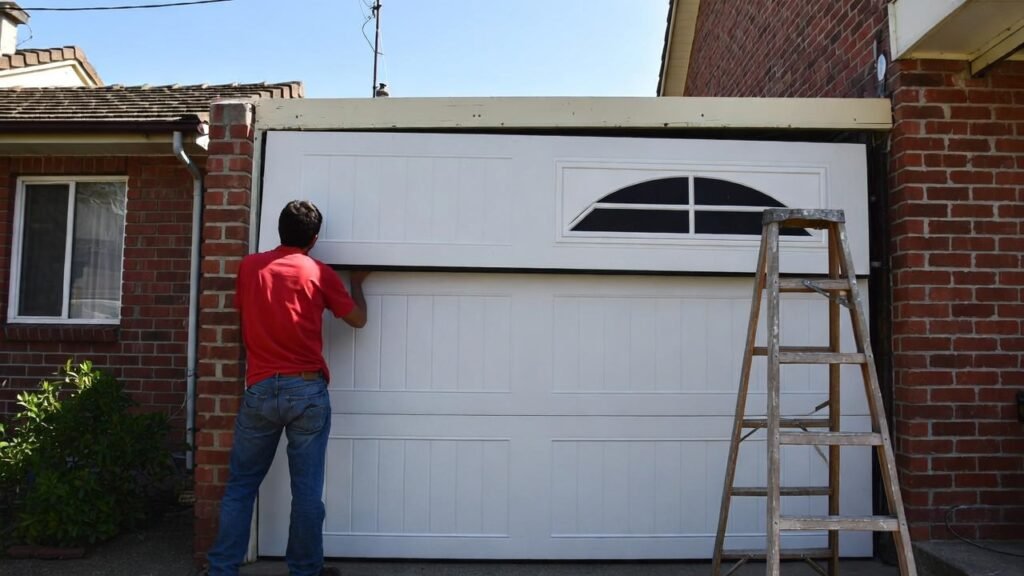
A garage door that’s jumped its track can feel like an emergency. It won’t open. It won’t close. It might be hanging at an angle. And every time you look at it, you’re thinking the same thing: Is this safe?
If you’re searching for Off-Track Garage Door Repair, you’re in the right place. In this comprehensive guide, we’ll explain:
What causes a garage door to go off track
Why it’s dangerous to ignore
What you can check yourself
When to call professionals
How our technicians at Sky Garage Door Repair fix it the right way
We’ll also answer common questions homeowners ask and show you how to prevent this from happening again.
Your garage door moves along metal tracks on both sides. These tracks guide rollers that allow smooth opening and closing. When a door becomes “off-track,” one or more rollers have slipped out of the track or the track itself has bent, shifted, or detached.
Let’s be clear: this is not a cosmetic issue. An off-track door can:
Garage door springs are under extreme pressure. According to the Consumer Product Safety Commission, thousands of garage door–related injuries occur annually due to improper handling.
If your door is visibly misaligned or unstable, avoid forcing it. Professional service is the safest option.
There isn’t just one reason. Based on real service calls, here are the most common causes:
Backing into the door — even lightly — can bend tracks or knock rollers loose. We’ve seen cases where small bumper contact caused hidden alignment issues that worsened over time.
Cables help lift the door evenly. If one snaps, the door lifts unevenly and jumps the track.
Old nylon or steel rollers can crack or break, leading to derailment.
Bolts and brackets securing the track may loosen over time due to vibration.
Improper installation or foundation shifting can cause tracks to pull away from the wall.
Debris, dirt buildup, or foreign objects can push rollers out.
Durable, high-grade parts ensuring long-lasting garage door performance.
Fast emergency repairs available anytime, day or night.
Skilled technicians delivering precise, safe, reliable repairs.
Upfront pricing with honest, transparent, no-obligation quotes.
⚠️ Safety First: Do not attempt repairs involving springs or cables.
Pull the emergency release cord to prevent motor strain.
Look for: Bent tracks, Loose brackets, Disconnected rollers, Obstructions.
Forcing the door can worsen damage. If the door is severely tilted or heavy on one side, it’s time to contact a technician.
Here’s how experienced technicians handle it properly:
We check:
Tracks
Rollers
Cables
Springs
Hinges
Opener alignment
Clamps are placed below rollers to prevent sudden movement.
Minor bends → Straightened
Severe damage → Track section replaced
Rollers are carefully guided back into track grooves.
If cables or rollers are worn, they’re replaced to prevent repeat issues.
We test manual balance and automatic operation to ensure smooth, even movement.
Pros:
Lower cost
Immediate attempt
Cons:
High injury risk
Can void warranty
May worsen damage
Pros:
Safe
Long-term fix
Warranty protection
Proper tools
Cons:
Service cost
In most off-track cases, professional service is strongly recommended.
Regular maintenance reduces derailment risk by up to 70% (based on industry maintenance data).
Lubricate rollers every 6 months
Tighten hardware annually
Inspect cables for fraying
Clean tracks regularly
Schedule yearly inspection
You can also explore our Garage Door Maintenance Services for preventive care options.
A homeowner called after their garage door was hanging sideways following minor vehicle impact. The cable had snapped, and the roller assembly was detached.
Repair steps included:
Cable replacement
Track realignment
Roller upgrade to sealed nylon
Full balance recalibration
Total repair time: 90 minutes
Cost savings vs full door replacement: Over $1,200
This is why fast repair matters.
Most repairs take 1–2 hours depending on severity.
No. It can fall or cause additional structural damage.
Only minor alignment issues may be DIY. Cable, spring, or severe track damage requires professionals.
It may if caused by accidental damage (like vehicle impact). Check with your provider.
Likely causes include broken cables, impact damage, or track misalignment.